

The Complete Guide to Chaga Mushrooms
You may have noticed that medicinal mushrooms are everywhere lately. From mushroom coffee to mushroom skincare, these unique fungi are more popular and widely available than ever. And one, in particular, stands out: the chaga mushroom, sometimes called the "king healer mushroom" — a nod to its long history of therapeutic use.
In this guide, we'll cover what Chaga is, how it's been used across traditional medicine traditions, what the current research says, and what to look for when choosing a chaga mushroom supplement. So grab a cup of chaga tea and let's get into it.
What Are Chaga Mushrooms?
Chaga mushrooms (Inonotus obliquus) are a fascinating fungus revered across cultures for their healing properties. Depending on where you encounter them, you may see Chaga referred to by other common names: clinker polypore, cinder conk, black mass, diamond of the forest, or kabanoanatake in Japanese.
What makes Chaga anatomically unusual is that what we see growing on the tree isn't a fruiting body — it's a highly condensed bundle of mycelium called a sclerotia, or conk. Most medicinal mushrooms are harvested at the fruiting body stage, where the highest concentration of beta-glucans and polysaccharides are found. Chaga is the exception — its bioactive compound profile, including betulinic acid, melanin, ergosterol, and inonotus obliquus polysaccharides, develops in the conk itself over years of growth on its host tree.
It's also worth noting: because Chaga is technically a mycelium mass rather than a traditional fruiting body, it doesn't carry the same mycelium-on-grain concerns you'll find with other mushroom supplements. Wild-harvested Chaga from birch trees is a structurally different animal entirely from grain-grown mycelium powders.
What Do Chaga Mushrooms Look Like?
Chaga doesn't look like your typical mushroom. There's no cap, no stem — just a hard, irregular conk that looks like burnt charcoal on the outside, with a reddish-brown interior. Harvesting one generally requires a sharp knife or hatchet; they're dense and extremely hard.
A Chaga conk can grow up to 30 inches long and 20 inches wide. Once harvested, it can take 20 years or more for the conk to regrow to its original size (3) — which is one reason ethical sourcing and sustainable harvesting practices matter so much with this particular fungus.
Where Do Chaga Mushrooms Grow?
Chaga is a cold-climate fungus of the Northern Hemisphere. While it will grow on alder, aspen, and elm trees, it strongly favors birch trees — and the compounds it draws from birch bark, particularly betulinic acid and ergosterol, are part of what makes birch-grown Chaga so distinctive as a dietary supplement.
You'll find Chaga across Northern Europe — Finland, Norway, Sweden — as well as Russia, Siberia, Canada, Alaska, Minnesota, and parts of New England (1). The cold climate and mature birch trees of these regions produce the conditions Chaga needs to develop its full compound profile over time.
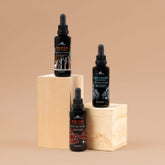
Naturealm's Chaga Tincture is wild-harvested from Alaskan birch — one of the most pristine sourcing environments available for this fungus.
Historical and Medicinal Use of Chaga Mushrooms
Chaga has a long, well-documented history in folk medicine — particularly in Eastern European traditions — before it became a fixture in Traditional Chinese Medicine. Historically, it was used to prevent cancer, manage blood sugar, protect the heart, reduce inflammation, and support the immune system. Other traditional uses included treating tuberculosis, liver disease, and digestive issues. Some Siberian villages still prepare chaga mushroom tea the same way their ancestors did thousands of years ago (1).
In Traditional Chinese Medicine, Chaga works on the spleen, stomach, liver, and kidney meridians — helping build qi, calm shen, restore the blood, and clear toxins from the body (4).
Health Benefits of Chaga Mushrooms
Calling Chaga the king healer mushroom isn't hyperbole. Its unique compound profile — beta-glucans, triterpenes, betulinic acid, melanin, ergosterol, polyphenols, and inonotus obliquus polysaccharides — gives it a broad range of documented effects on human health. Here's what the research currently supports.
Rich in Antioxidants
Chaga is one of the highest-antioxidant foods measured by ORAC value — a metric for how effectively a substance neutralizes free radicals. Free radicals are unstable molecules that, without sufficient antioxidants to neutralize them, create oxidative stress in the body — contributing to inflammation, cellular damage, accelerated aging, and chronic disease. Chaga's melanin, polyphenols, and ergosterol content all contribute to its exceptional antioxidant capacity.
One study found that cells pre-treated with Chaga extract had up to 40% less free radical damage than the control group (6). That's a meaningful reduction in oxidative stress — and it speaks to why Chaga has been explored in the context of healthy aging and as a potential antitumor agent.
For more on Chaga's antioxidant profile and ORAC value specifically, we've covered it in depth here.
Blood Sugar Management
Monitoring blood sugar is critical for anyone managing diabetes or insulin resistance. Animal studies have found that subjects given Chaga extract showed lower blood sugar and insulin levels compared to controls (7). The beta-glucans and inonotus obliquus polysaccharides in Chaga are thought to play a role here, though human clinical trials are still needed to confirm the mechanism and appropriate dosage for diabetes management.
Immune System Support
Chaga's beta-glucans and polysaccharides have demonstrated meaningful effects on immune function in recent studies. Chaga positively influences white blood cell production, lymphocyte activity, and cytokine signaling — the cytokines being the proteins that coordinate communication between immune cells. This anti-inflammatory activity is one of the mechanisms through which Chaga appears to modulate immune response rather than simply stimulating it (6).
Both in vitro and animal studies have also shown Chaga's potential as an antitumor agent — demonstrating an ability to slow the growth of cancer cells across liver, lung, breast, prostate, and colon cancer lines (7). This is a promising area of research, though it remains early-stage for human applications.
Antiviral Properties
Chaga has shown antiviral activity in preliminary research, with studies pointing to its polysaccharides and betulinic acid content as the likely drivers. Betulinic acid — a compound Chaga synthesizes by converting betulin from birch trees — has been studied for its antiviral and antitumor properties independently of Chaga (6).
Cholesterol and Blood Pressure
Research suggests Chaga may help lower LDL cholesterol while raising HDL levels, with potential implications for heart disease management. Scientists believe the same anti-inflammatory mechanism responsible for Chaga's immune effects may also be responsible for its cholesterol-regulating properties (6). Some early research also points to a blood pressure-modulating effect, likely tied to its triterpenes and polyphenols — though this requires more study in human populations.
Ethically Wildcrafting Chaga Mushrooms
Before you head into the woods with a hatchet, it's worth understanding the difference between foraging and ethically wildcrafting. Foraging is simply gathering wild food sources. Wildcrafting goes a step further — it's harvesting local resources with medicinal intent and with the health of the local ecosystem in mind.
Because Chaga conks take decades to regrow after harvest, careless or excessive collection can have long-term consequences for both the fungal population and the birch trees that host them. Thoughtful wildcrafting means learning which species are threatened in your area, identifying lookalikes, taking only what the environment can sustain, and leaving the mycelium structure intact wherever possible.
This is also why sourcing transparency matters so much when choosing a Chaga dietary supplement. Knowing where your Chaga came from — and how it was harvested — is not a marketing detail. It's a meaningful indicator of product quality and environmental stewardship.
How to Enjoy Chaga Mushrooms
Unlike culinary mushrooms you might toss into a stir-fry, Chaga isn't eaten whole — its dense, woody conk structure makes that impractical. Instead, Chaga is best consumed as chaga tea, chaga powder, or a dual-extracted tincture.
Chaga tea (also called chaga mushroom tea) is the most traditional preparation — essentially a long hot-water decoction of dried Chaga chunks. It has a mild, earthy, slightly vanilla-like flavor that makes it one of the more palatable medicinal mushroom preparations. Here's how to pair Chaga with tea for the best results.
Chaga powder (extracted) can be added to coffee, smoothies, or any hot liquid. Look for chaga powder that specifies dual extraction — hot water alone won't capture the fat-soluble compounds like triterpenes and betulinic acid. Here's a breakdown of extraction methods and what each one captures.
Tinctures are the highest-bioavailability format — dual extraction is already done, and a few drops from a dropper delivers the full compound spectrum immediately. The Naturealm Chaga Tincture is dual extracted from wild-harvested Alaskan birch Chaga, with no additives.
When shopping for any Chaga dietary supplement — whether capsules, chaga powder, or tincture — look for brands that openly share sourcing and extraction methods, disclose third-party testing, and specify dual extraction. If the label doesn't say dual extraction, assume it's water-only.
One additional note worth flagging: Chaga is naturally high in oxalate. People with a history of kidney stones or oxalate sensitivity should consult a healthcare provider before supplementing regularly, particularly at higher doses.
Naturealm Chaga Tincture — wild-harvested Alaskan birch, dual extracted, nothing added.
Shop Chaga Tincture Shop Sacred 7 (includes Chaga)How Chaga Compares to Other Medicinal Mushrooms
Chaga is exceptional as a standalone antioxidant and immune-support fungus, but it works well alongside other medicinal mushrooms in a daily stack. A few worth knowing in context:
- Reishi — shares Chaga's triterpenes and immune-modulating beta-glucans, but is more focused on stress and sleep regulation. Often paired with Chaga for a comprehensive immune and adaptogenic effect.
- Lion's Mane (Hericium erinaceus) — where Chaga focuses on immunity and oxidative stress, Lion's Mane is the cognitive function specialist. Complementary rather than overlapping.
- Turkey Tail — another polysaccharide-rich immune mushroom, Turkey Tail has one of the strongest research bases for gut-immune axis support and has been studied in antitumor contexts as well.
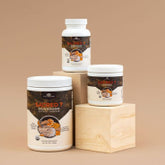
If you want all seven species in one daily dose — including Chaga — Sacred 7 covers the full stack. Here's why blends outperform single-species supplements for most people.
Chaga is one of seven species in Sacred 7 — 100% fruiting body (and wild-harvested Chaga sclerotia), hot water extracted, USDA Organic.
Shop Sacred 7 Powder Shop Sacred 7 CapsulesChaga Mushrooms: Nature's Ultimate Powerhouse
Few medicinal mushrooms carry the same breadth of documented traditional use and modern research as Chaga. From immune modulation and anti-inflammatory activity to antioxidant potency, antiviral properties, and blood sugar support — the king healer mushroom earns its name.
As with any dietary supplement, the quality of what you buy matters as much as the species itself. Dual extraction, responsible sourcing from wild birch trees in the Northern Hemisphere, and transparent third-party testing are the minimum bar. Anything less and you're not getting Chaga — you're getting a label.
Want to go deeper? Here's what's happening to mushroom supplement quality across the industry — and how to spot the difference before you buy.
References
- Hobbs, Christopher, PhD. Christopher Hobbs's Medicinal Mushrooms: The Essential Guide. Storey Publishing, LLC, 2021.
- DrWeil.com. "Choose Chaga Mushrooms?" March 15, 2023.
- UMN Extension. "Chaga — a Delicious Find in the Winter Woods." February 3, 2021.
- White Rabbit Institute of Healing. "Chaga." June 17, 2019.
- Griggs, Mary Beth. "The Iceman Wore Five Different Animal Products When He Died." Popular Science, April 26, 2021.
- Muinos, Lacey. "6 Promising Benefits of Chaga Mushrooms, According to Research." Real Simple, May 15, 2023.
- Conklin, Lisa Marie. "5 Reasons to Consider Chaga Mushrooms." American Association of Naturopathic Physicians, May 13, 2021.